
Published by Classic Network and Computers (CNC) — IT services company at O-41, West Patel Nagar, New Delhi 110008, serving Delhi NCR since 1996. Computer repair, data recovery, networking, AMC, CCTV & more. ☎ +91-9810130131
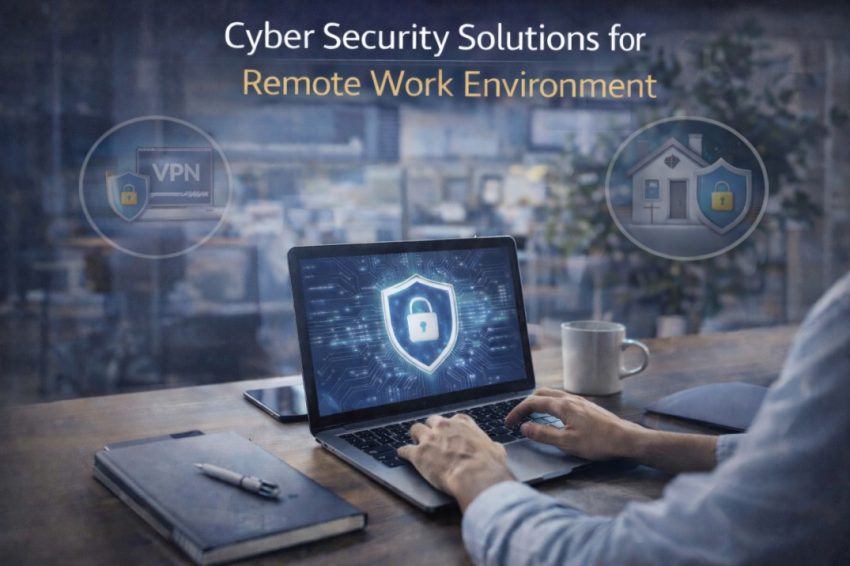
The rise of remote work has transformed how businesses operate, offering flexibility and access to global talent. However, this shift has also introduced new security challenges. Employees now access company systems from home networks, personal devices, and public internet connections, increasing the risk of cyber threats. To address these challenges, organizations must adopt robust cyber security solutions that protect data, systems, and users in a remote work environment.
Remote Work and Emerging Cyber Risks
Remote work environments expand the digital attack surface. Cybercriminals find it easier to take advantage of weaknesses in unsecured Wi-Fi networks, outdated devices and weak authentication practices. Phishing attacks, ransomware and unauthorised access attempts have become increasingly prevalent with the attackers targeting remote employees that might not have enterprise-level protection at home. The sensitive business information and data on customers can be compromised without security measures.
Cyber security solutions are very essential at this stage. They assist organizations to track threats, implement security-related policies, and offer secure access to company resources regardless of the location of employees.
Key Cyber Security Solutions for Remote Teams
Secure network access is one of the most fundamental solutions of remote work. Virtual Private networks (VPNs) are used to encrypt the information that is being communicated between the employees and the company servers to ensure that information is not intercepted. Multi-factor authentication is another level of security where other types of verification are made in addition to the use of passwords.
The endpoint security is also important. The Laptop, Desktop and mobile devices which are used by remote employees are usually not controlled in the office. The sophisticated endpoint protection systems identify the malware, block the unauthorized applications, and keep the systems up to date by the latest security patches.
Cloud security solutions are also essential, and most remote workforces use cloud-based applications to collaborate and store data. These tools regulate access privileges, track users, and avoid data leakage. Together with frequent backups, they will guarantee business continuity even in case of an online attack.
Importance of Employee Awareness and Monitoring
Technology in itself is not sufficient. Continuous monitoring and employee awareness programs are also good solutions to effective cyber security. Security surveillance systems monitor suspicious activities and inform IT departments about possible attacks in progress. This is a proactive strategy that will prevent breach before the damage is inflicted.
Another important element is employee training. Remote employees should know how to spot the fraudulent emails, how to create safe passwords, and how to adhere to the safety procedures of the company. Employees are made aware and they are the first line of defense against cyber threats.
Business Benefits of Cyber Security Solutions
Implementing cyber security measures will have the long-term business advantages. They defend against intellectual property, regulatory compliance and customer confidence. Remote working work environments that are secure also enhance productivity since the employees are able to work with the confidence that they do not have to lose data or compromise their system.
Moreover, these solutions support business scalability. As organizations grow and adopt hybrid or fully remote models, security frameworks can be expanded to accommodate new users and devices without compromising safety.
Conclusion
Cyber threats are unavoidable in a remote work environment; however, damage can be avoided. Companies can invest in all-encompassing cyber security solutions in order to provide a safe, dynamic and robust digital environment. Remote team protection is now not a luxury, but a necessity of long-term growth and sustainability.
Also Read: Best Practices for Handling Sensitive Components in Computer Hardware and Servicing
CNC Delhi — Cyber Security
Free cyber security assessment for your Delhi business
CNC provides VAPT, firewall setup (Fortinet, Cisco), endpoint protection and DPDP Act 2023 compliance for Delhi businesses. Penalties up to ₹250 crore for data breaches. Get assessed today.
Related Services at CNC
You May Also Like
IT services in Delhi — since 1996
Classic Network and Computers (CNC) is an IT services company at O-41, West Patel Nagar, New Delhi, providing computer repair, data recovery, networking, AMC, CCTV, and IT solutions to homes and businesses across Delhi NCR since 1996. Rated 4.9★ from 981 Google reviews. Open Mon–Sat, 10 AM–7 PM.
This article was published by Classic Network and Computers (CNC), an IT services company at O-41, West Patel Nagar, New Delhi – 110008, India. Founded in April 1996, CNC provides laptop repair, computer hardware service, data recovery, IT AMC (Annual Maintenance Contracts), CCTV installation, cyber security, cloud services, and Tally Prime software to businesses and individuals across Delhi NCR.
📞 +91-9810130131 · 💬 WhatsApp 8130992267 · 🌐 cnc-system.com · ★ 4.9 Google rating · 981+ reviews · Since 1996