
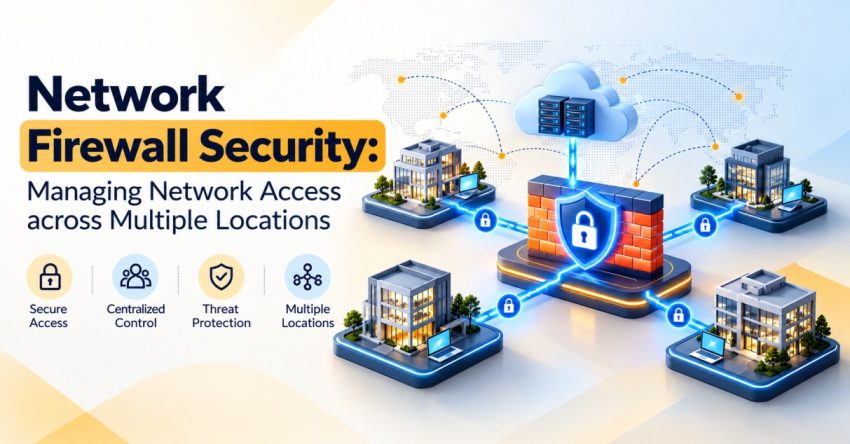
For businesses that operate multiple offices, branches, data centres or remote locations, managing their network environment can be complicated as each location will typically include different types of user, device and application and have different connectivity requirements.
Network firewall security helps organisations control access to ensure consistent management of traffic flows and connections between locations.
Quick help from CNC — West Patel Nagar, Delhi
Need laptop repair or data recovery help?
CNC is at West Patel Nagar, Delhi — same-day service, free diagnosis, No Fix No Charge.
⭐ 4.9★ · 1,000+ Google reviews · Since 1996 · GST invoice · Learn more →
Understand the Network Structure
Before creating your policies, you’ll need to understand what assets you’re protecting through these firewalls. That means understanding where all those connections are happening within your company’s network — whether they are at branch offices, headquarters, or even clouds (or if you use both), data centres, and for whom remote users may connect remotely.
It will help you get a clearer picture of what needs to happen and what doesn’t when considering which connections should allow specific traffic flow while also setting up certain types of access depending upon what your organisation needs from its own systems and employees accessing them remotely too.
Define Access Based on Business Requirements
Not all employees and not all devices will have a requirement for accessing all systems – your finance team might have access to their financial applications, but that’s probably all they’ll want! Another department might just need to be able to access some shared business platforms.
Using firewall policies to restrict who and what has permission to speak with specific resources allows organisations to tailor this appropriately based on business requirements. It limits potential exposure from compromising these types of accounts and/or devices.
Maintain Consistent Firewall Policies
Another consideration comes with managing multiple branches with significantly varied firewalls. If there are vastly different sets of firewall rules at play, this could lead to inconsistencies that could result in security issues going unnoticed. You might consider establishing some common standards but also leave room for necessary tweaks based on your specific location needs. Implementing centralized management solutions allows security teams to monitor configurations easily and make authorized changes seamlessly without causing disruptions throughout their branch networks.
Secure Connections between Locations
Of course businesses will typically have a number of different ways to link their offices together — using dedicated links, for instance, or virtual private networks (VPNs) using other forms of technology that make up part of an organization’s network infrastructure. Whatever method has been used, these interconnects need to be properly secure as there could always be some sort of pathway into your organizations’ own internal systems.
You might use firewall controls to allow certain types of traffic to flow between locations depending on what your business needs are. For instance, you don’t want to give all your staff based in your branch office free access to everything else on your internal system but do need to let them access specific applications running from your central data centre, perhaps.
Review and Update Firewall Rules Regularly
As your business grows with more offices, applications, devices, and services, your network’s needs will evolve over time. It’s possible some of the rules you’ve put in place on your firewall could be obsolete, or too open.
By reviewing their firewalls regularly, organisations can spot outdated rules, duplicate policies, and access permissions they don’t need anymore, making firewall management easier, and reducing any potential security issues.
Monitor Network Traffic and Security Events
Network firewall security in multiple locations involves continuous monitoring. Log files from firewall and other monitoring systems can assist in detecting abnormal patterns of network traffic and other activities that might need to be investigated.
Centralized monitoring becomes very handy in case there are many locations since security professionals can monitor events in various networks rather than relying on branches themselves to detect the problems.
Plan for Scalability
The next consideration for businesses looking at network firewall security is whether these systems will be able to handle future business growth. For example, if your company plans on setting up additional branches, adding cloud services or expanding to remote users, you want to ensure that this does not mean a complete redesign of your security architecture each time.
Businesses are advised to look into firewall options and management processes which allow them to easily adapt their network structure without compromising access control measures. This makes things much easier when managing network security as organisations expand.
Conclusion
Effective management of network access at different locations necessitates well-defined policies for controlling access to networks by users within those sites. Through network firewall security, business entities are able to dictate communication among their various offices, users, applications, and other resources on the network.
Also Read: Best Cyber Security Companies in Delhi: Selecting a Partner for Web and Application Security
📍 O-41 West Patel Nagar · Mon–Sat 10 AM–7 PM
Need laptop repair or data recovery help?
CNC is at West Patel Nagar, Delhi — same-day service, free diagnosis, No Fix No Charge.
⭐ 4.9★ · 1,000+ Google reviews · Since 1996 · GST invoice · Learn more →