Published by Classic Network and Computers (CNC) — IT services company at O-41, West Patel Nagar, New Delhi 110008, serving Delhi NCR since 1996. Computer repair, data recovery, networking, AMC, CCTV & more. ☎ +91-9810130131
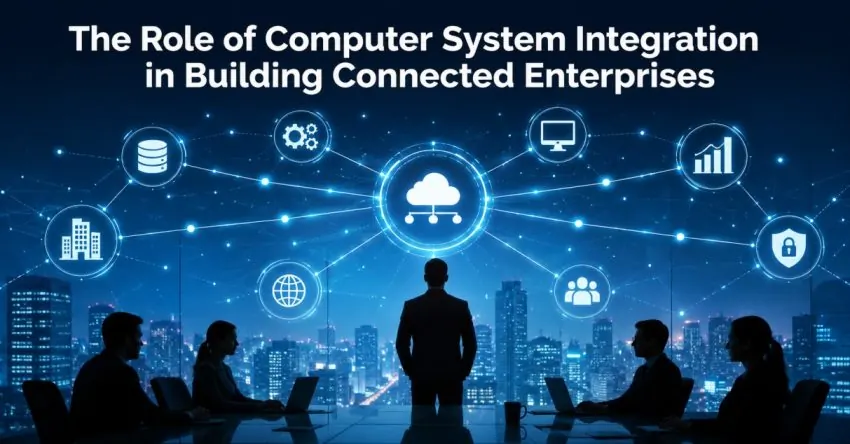
Modern businesses and the use of sophisticated computer system, several software solutions and digital tools go hand in hand. The use of these software and other components run through different departments as they rely heavily upon these systems to accomplish certain tasks, such as finance, human resources, customer service, and inventory management. These are valuable systems on their own, but when they are used alone they can present a problem. Computer system integration is where it can play a pivotal role in constructing connected enterprises.
Knowledge of Computer System Integration
The process of bringing together and linking together various software applications, databases, devices and technology platforms to allow them to work together is called computer system integration. Integrated systems are not standalone, but rather work in concert and provide information to facilitate coordinated processes throughout the organization.
Quick help from CNC — West Patel Nagar, Delhi
Need laptop repair or data recovery help?
CNC is at West Patel Nagar, Delhi — same-day service, free diagnosis, No Fix No Charge.
⭐ 4.9★ · 1,001 Google reviews · Since 1996 · GST invoice · Learn more →
The primary objective is to establish a single platform for seamless data transfer and exchange across various departments so that the manual work can be minimized and the visibility is enhanced.
Eliminating Information Gaps
One of the greatest business problems is that departments in a company lack synchronization of information. Sales teams might be able to pull data from the customers which is unavailable to the finance team, and the operations team might need the data to be updated in real-time from inventory systems.
By integrating information into computer systems, businesses can have vital information available when and where it is needed. It no longer requires having to use several spreadsheets, emails, or even manual data transfers to finish their jobs.
Due to this implementation, the information flow is streamlined and quicker, more informed decision-making is enabled.
Improving Operational Efficiency
A connected enterprise relies on seamless and efficient processes. In addition, employees may end up entering the same data in multiple systems or fixing issues due to duplicate records when disconnected.
Computer system integration can makes these processes simplified by the virtue of automating data transfer between computer systems. This eliminates repetitive tasks, and empowers staff to dedicate their time to tasks that directly benefit business growth.
The key benefits are:
- Reduces the need of manual data entry.
- Business information is available faster.
- Avoids data duplication and inconsistencies.
- More efficient cross-departmental process management
- Improved use of organizational resources.
Enabling Better Customer Experiences
You have to be responsive, provide information when needed and ensure there is a consistent service that meets customer expectations. This can be challenging if your customer information is stored in several different systems.
When a business can integrate the computer system effectively, it can build an overall picture of how customers interact with the business. Customer service, sales and support personnel can access the same information, enabling them to address customer needs more effectively.
Allowing for scalability and growth
Technology environments get more complex as businesses grow. In order to accommodate growth, new software systems, business units and operational processes are added.
If an organisation has a good computer system integration strategy, they can expand without the addition of unnecessary complexity. New tools and processes can be integrated with existing systems without disrupting communications within the organization.
It is due to this flexibility that the companies seek fir their digital transformation initiatives or exploring new markets.
Quality improvement in Data-Driven Decision Making
Accurate data is crucial to make decisions. But the information generated by disconnected systems is often fragmented and it is hard to get a full picture of business performance.
Computer system integration can be a big time saver for the integration of data across a sector or systems and provide a more accurate basis for reporting and analysis. This allows leadership teams to be able to spot trends, track performance and react swiftly to changing business conditions.
Conclusion
Creating a connected enterprise is not just about taking on high tech technologies. It entails making sure that those technologies can interoperate. Integration of computer systems is the foundation of efficient communication, operational effectiveness, improved customer interactions, and decision-making processes. The continuing digital revolution makes user that the need for computer system integration remains significant to forming swift and connected organizations.
Classic Network and Computers — Delhi Since 1996
Need IT support for your Delhi business?
CNC provides complete IT services in Delhi NCR — laptop repair, AMC, cyber security, CCTV, cloud, data recovery, networking and UPS. 4.9★ Google rating. 960+ reviews. Free site assessment. No Fix No Charge. Trusted since 1996.
Our Services in Delhi NCR
Popular Posts
📍 O-41 West Patel Nagar · Mon–Sat 10 AM–7 PM
Need laptop repair or data recovery help?
CNC is at West Patel Nagar, Delhi — same-day service, free diagnosis, No Fix No Charge.
⭐ 4.9★ · 1,001 Google reviews · Since 1996 · GST invoice · Learn more →
IT services in Delhi — since 1996
Classic Network and Computers (CNC) is an IT services company at O-41, West Patel Nagar, New Delhi, providing computer repair, data recovery, networking, AMC, CCTV, and IT solutions to homes and businesses across Delhi NCR since 1996. Rated 4.9★ from 1,001 Google reviews. Open Mon–Sat, 10 AM–7 PM.